
Our first bat recordings at Llantrithyd Park have revealed something very exciting.
Monitoring carried out in just the north-west corner of the Deer Park has already indicated an impressive diversity of bats, with potentially around 11 different species using this part of the Park.
Among those recorded were serotine, Leisler’s bat, lesser horseshoe, noctule and brown long-eared bats, together with several recordings from the Myotis group.
To put that into perspective, there are only 18 resident bat species in the UK, so finding evidence of such a wide range within one relatively small area of Llantrithyd is significant.
Why are bats important?
Bats are a very useful indicator of the health of a landscape. Different species rely on different habitats for feeding, roosting and travelling, so a good variety of bats can tell us that a landscape is providing many of the things wildlife needs.
At Llantrithyd, that includes our mixture of ancient and mature trees, woodland edges, open pasture, hedgerows, water, sheltered areas and, importantly, dark skies.
Bats feed on huge numbers of insects every night and form an important part of the natural ecosystem. Some species prefer to hunt high above open ground, while others fly close to trees, woodland edges or water. Others depend heavily on old buildings, hollow trees and undisturbed places to roost.
That means features which can sometimes appear untidy or unimportant to us — an old tree, a dead limb, an overgrown margin or an unlit corner — may actually be extremely valuable habitat.
Some very special species
A number of the bats indicated by these first recordings are of particular conservation interest.
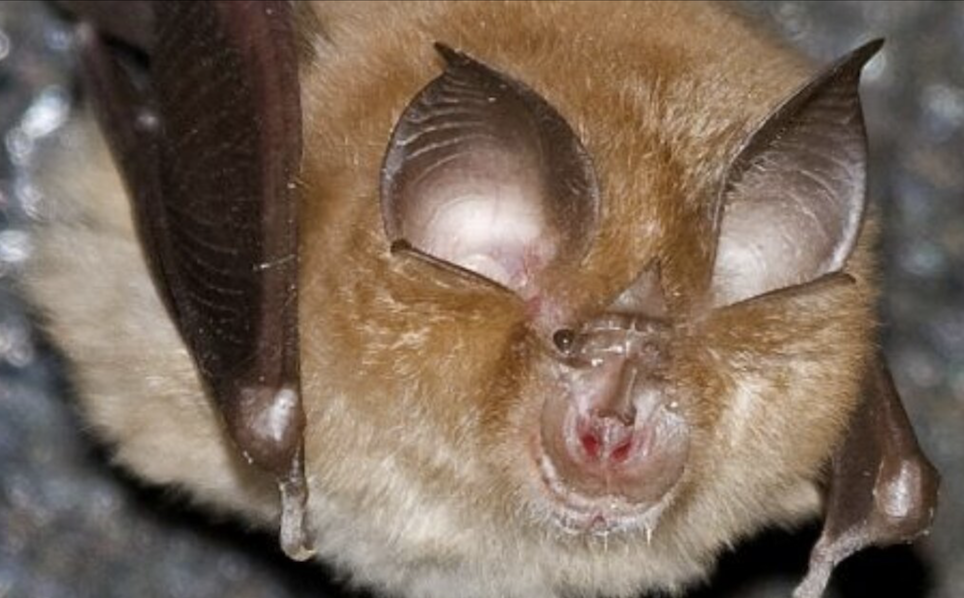
The lesser horseshoe bat, for example, is one of Britain’s smallest bats. When roosting it characteristically wraps its wings around its body, giving it a distinctive appearance. It is particularly associated with western Britain and Wales and relies on connected habitats such as woodland, hedgerows and sheltered pasture.
The serotine is one of Britain’s larger bats and is a species of conservation concern. It typically emerges around dusk and feeds on larger insects such as beetles and moths.
The Leisler’s bat is another relatively large, fast-flying species. It tends to roost in trees and can cover significant distances while feeding, making mature woodland and established tree populations particularly important.
The noctule, one of the UK’s largest bats, is a powerful flyer that often hunts high above woodland and open landscapes. It commonly uses holes and cavities in mature trees as roosts.
The brown long-eared bat is quite different. Its enormous ears allow it to listen for tiny sounds made by insects, sometimes even picking prey directly from leaves and branches. Because it flies relatively slowly and close to vegetation, quiet, connected woodland habitat is especially valuable to it.
Several recordings were also identified within the Myotis group. Species in this group can be difficult to distinguish from sound recordings alone, so further monitoring will help us understand exactly which Myotis species are present.
And this is only the beginning
Perhaps the most exciting part is that these first recordings came from only one corner of the Park.
We now plan to carry out further bat monitoring at different locations right around Llantrithyd Park so that we can begin to build a much more complete picture of the species living, feeding and travelling through the Deer Park.
Different parts of the Park contain very different habitats, from woodland and old parkland trees to open pasture, wet areas and sheltered edges, so it will be fascinating to see whether different species favour different areas.
The more we understand about the wildlife living here, the better decisions we can make about how the Park is managed in the future.
It is very easy to look at an old tree, an unmanaged corner or a dark area of countryside and assume that it is not doing very much.
Nature sees it very differently.
We cannot protect everything, but where places still support this level of wildlife and biodiversity, we have a responsibility to understand what is there and to protect what we can.
A huge thank you to Restore the Thaw for carrying out this initial bat survey and helping us begin to understand just how important Llantrithyd Park may be for bats.
This first piece of monitoring has already given us a fascinating glimpse into what is happening after dark in just one corner of the Deer Park. We are incredibly grateful for their time, expertise and support, and we look forward to building on this work with further recording around the Park in the future.
For us, these first bat recordings are another reminder that Llantrithyd Park is not simply a beautiful historic Deer Park.
It is also a living ecosystem — supporting wildlife above, below and, as we are increasingly discovering, after dark. 🌳🦇